When most people think of Hawaii's architectural heritage, they picture open-air homes, tropical modernism, and seamless indoor-outdoor living. What many don't realize is that some of Hawaii's most influential architectural ideas can be traced back thousands of miles to Vienna, Austria.
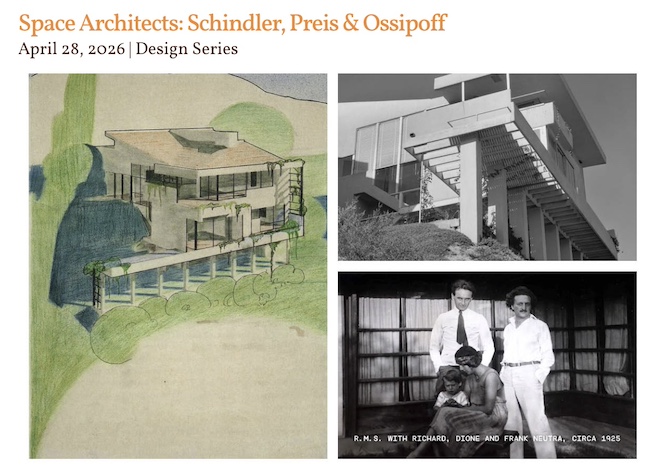
Recently, I had the opportunity to attend an extraordinary two-day event titled "Space Architects: Schindler, Preis, and Ossipoff," hosted by the Liljestrand Foundation, DOCOMOMO Hawaii, the Honolulu Museum of Art, and the Kaimana Beach Hotel. The event explored the fascinating connections between Austrian-born architects and the development of modern architecture in Hawaii.
What I discovered was a remarkable story that connects Vienna, Los Angeles, Honolulu, and some of the most influential architects of the 20th century.
Discovering Rudolph Schindler
The event began at the Doris Duke Theatre at the Honolulu Museum of Art with a screening of a documentary about architect Rudolph Schindler by Valentina Ganeva. Before attending, I knew very little about Schindler. By the end of the evening, it was clear that he was one of the most innovative architects of his generation.
Born in Vienna, Austria, Schindler immigrated to the United States and eventually worked for legendary architect Frank Lloyd Wright. While many people associate modern architecture with the post-World War II era, Schindler was experimenting with groundbreaking ideas decades earlier.
His use of concrete, translucent materials, open floor plans, and innovative living spaces challenged conventional architecture and helped establish principles that would later become synonymous with mid-century modern design.
One of his most famous works, the Kings Road House in Los Angeles, remains an architectural landmark and a testament to his visionary approach.
The Vienna-Hawaii Connection
What makes Schindler's story particularly relevant to Hawaii is the unexpected connection between Vienna and Honolulu. Another influential architect with Austrian roots was Alfred Preis, best known in Hawaii for designing the USS Arizona Memorial. Preis also contributed significantly to Honolulu's architectural landscape through numerous commercial and residential projects.
Like Schindler, Preis was born in Vienna and brought European modernist influences to his work. The event highlighted how these Austrian architects helped shape the evolution of modern architecture and influenced future generations of designers in Hawaii.
Vladimir Ossipoff: Hawaii's Master Architect
No discussion of Hawaii architecture would be complete without mentioning Vladimir Ossipoff. Often referred to as Hawaii's master architect, Ossipoff created some of the islands' most iconic residential, commercial, and institutional buildings. His designs emphasized harmony with Hawaii's climate, culture, and natural surroundings.
Growing up on Oahu, I was surrounded by Ossipoff's work without fully realizing it. His influence can be seen everywhere from some of my family's residences to Punahou School, Outrigger Canoe Club, the Pacific Club and many more public spaces.
The Liljestrand House, where the second evening's events were held, is widely regarded as one of the finest examples of Ossipoff's work and a masterpiece of tropical modern architecture. Today, the home serves as both an architectural landmark and a reminder of the lasting impact Ossipoff had on Hawaii's built environment.
Preserving Hawaii's Architectural Heritage
One of the most inspiring aspects of the event was meeting architects, historians, homeowners, and preservation advocates dedicated to protecting Hawaii's architectural legacy. Organizations like DOCOMOMO Hawaii and the Liljestrand Foundation continue to educate the public about the importance of preserving mid-century modern architecture.
The Liljestrand House on Tantalus
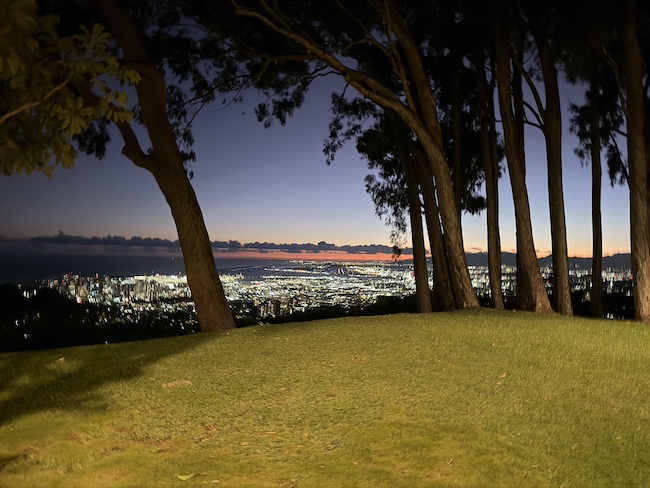
Honolulu City Light View from the Liljestrand House
The 2nd night was at the Liljestrand Home on Tantalus. I carpooled there with Margaret Murchie, a Realtor friend I worked with at Coldwell Banker early in my career.
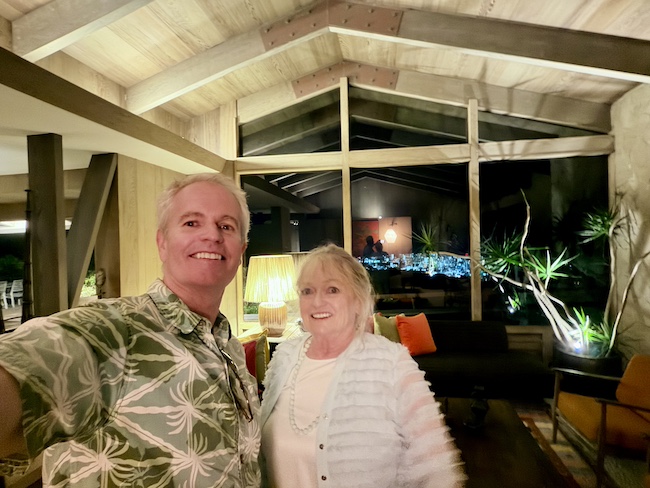
Margaret Murchie and I at the Liljestrand House
The backdrop of such a beautiful home and property really made the night special. Kristi Cardoso and Trudi Couillard from the Liljestrand Foundation put an a spectacular event! There was Austrian beer, wine and charcuterie.
The People Bringing Architectural History to Life
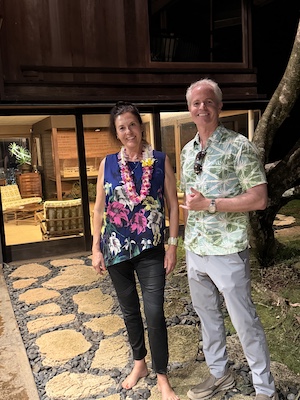
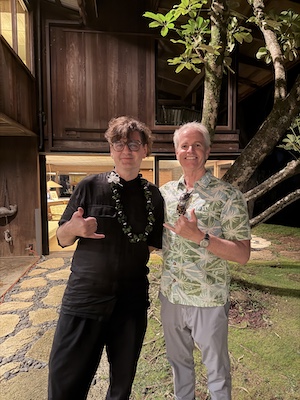
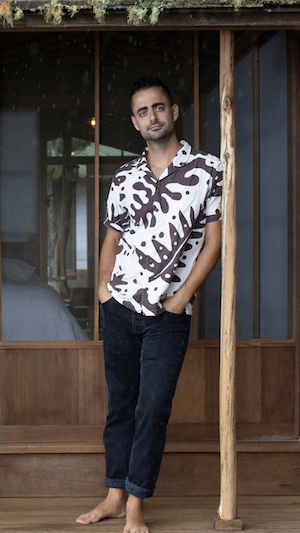
Valentina Ganeva, Axel Schmitzberger and Graham Hart
One of the most valuable aspects of the "Space Architects: Schindler, Preis, and Ossipoff" event was the opportunity to hear directly from the individuals who are actively preserving, documenting, and sharing this architectural legacy with new generations.
Valentina Ganeva: Telling Schindler's Story
At the center of the event was filmmaker Valentina Ganeva, whose documentary on Rudolph Schindler served as the foundation for many of the weekend's discussions.
Ganeva's film is the result of years of research and dedication to uncovering Schindler's life, work, and influence on modern architecture. Through interviews, historical archives, and thoughtful storytelling, she introduces audiences to an architect who was often overshadowed by contemporaries such as Frank Lloyd Wright and Richard Neutra, despite being one of the most innovative designers of the twentieth century.
What stood out most was her passion for connecting seemingly unrelated people, places, and events. Throughout the documentary and subsequent discussions, she explored how unexpected connections and coincidences helped shape Schindler's journey and influence. Her work not only preserves architectural history but makes it accessible and engaging for people who may have never heard Schindler's name before attending the event.
Axel Schmitzberger: Connecting Vienna, Hawaii, and Modernism
Architect, educator, and author Axel Schmitzberger provided another crucial perspective throughout the weekend.
As someone deeply involved in researching Alfred Preis and preserving modernist architecture, Schmitzberger helped draw many of the connections between Vienna's architectural traditions and their influence on Hawaii. His expertise brought additional context to the lives and careers of both Rudolph Schindler and Alfred Preis, demonstrating how their Austrian roots shaped their design philosophies.
During the event, Schmitzberger discussed his extensive research into Preis, work that ultimately led to the publication of his book on the architect. Beyond his scholarship, he has also been actively involved in preserving significant mid-century homes on Oahu, working alongside homeowners and preservation advocates to ensure these architectural treasures remain intact.
His efforts demonstrate that preservation extends beyond academic research. It requires collaboration among architects, historians, homeowners, and community members who recognize the importance of protecting Hawaii's architectural heritage.
Coincidentally, I recently listed an Alfred Preis-designed home for sale, which sparked even more curiosity on my part. The timing of this event couldn't have been better. Listening to Axel Schmitzberger discuss Preis's life and work gave me a much deeper appreciation for the architect and his lasting impact on Hawaii.
Graham Hart: Preserving Hawaii's Architectural Legacy
Local architect Graham Hart brought an important Hawaii-focused perspective to the panel discussions.
Hart has long been involved in architectural preservation efforts throughout the islands and serves as an advocate for protecting Hawaii's modernist landmarks. His work with DOCOMOMO Hawaii and other preservation organizations has helped raise awareness about the cultural and historical significance of mid-century architecture.
One of Hart's most notable contributions is his involvement with Palehua, Vladimir Ossipoff's personal retreat in Makakilo. Today, the property serves as a nonprofit educational resource that allows visitors to experience Ossipoff's design philosophy firsthand. Through stewardship and public engagement, Hart and his colleagues have helped ensure that future generations can appreciate one of Hawaii's most important architectural sites.
During the panel discussions, Hart offered valuable insights into how architects such as Ossipoff, Preis, Alan Johnson, Tommy Perkins, and Philip Fisk influenced one another and collectively shaped Hawaii's architectural identity. His perspective highlighted the collaborative nature of Hawaii's architectural community and the lasting impact these designers continue to have on the islands today.
Why Their Work Matters
The stories of Schindler, Preis, and Ossipoff might not be as widely known as some of architecture's biggest names, but thanks to the efforts of people like Valentina Ganeva, Axel Schmitzberger, and Graham Hart, their contributions are reaching new audiences.
Whether through filmmaking, research, preservation, education, or advocacy, these individuals are ensuring that Hawaii's architectural history is not only remembered but actively celebrated. Their work reminds us that architecture is more than buildings. It is a record of cultural exchange, innovation, and the people whose vision helped shape the places we call home.
Hidden Mid-Century Modern Neighborhoods on Oahu
For architecture enthusiasts, Oahu offers several neighborhoods where mid-century modern design can still be experienced today. Areas such as Puu Panini, Waialae Nui Ridge, and portions of Manoa feature notable examples of homes designed by Ossipoff, Preis, and their contemporaries.
Many of these homes remain privately owned, but their architectural influence continues to shape Hawaii's residential design market.
As a real estate professional who specializes in distinctive and architecturally significant homes, I've had the privilege of helping buyers and sellers appreciate the unique value these properties offer.
Why This History Matters Today
Architecture tells the story of a place and its people. The connections between Vienna, Los Angeles, and Honolulu demonstrate how ideas travel across continents and generations. The work of Rudolph Schindler, Alfred Preis, and Vladimir Ossipoff reminds us that innovation often emerges through collaboration, cultural exchange, and a willingness to challenge convention.
Understanding these influences helps us better appreciate the homes, buildings, and communities that define Hawaii today.
For anyone interested in architecture, history, design, or Hawaii real estate, the stories behind these remarkable architects offer a deeper understanding of the islands we call home.
Final Thoughts
Attending the "Space Architects: Schindler, Preis, and Ossipoff" event was an incredible experience that reinforced the importance of preserving and celebrating Hawaii's architectural heritage.
The unexpected connection between Vienna and Hawaii reveals a fascinating chapter in architectural history, one that continues to influence the way we design, build, and live today.
Whether you're an architecture enthusiast, homeowner, investor, or simply curious about Hawaii's history, exploring the legacy of these visionary architects offers valuable insight into the islands' unique character and enduring beauty.